
Today's readings are about hope and the universality of God's kingdom, no longer limited to the Jewish people but to all who have faith in God. The prophet Isaiah stresses this in our first reading: "my house will be called a house of prayer for all the peoples." God promises to bring to His holy mountain all who keep his commandments, not just His chosen people. St. Paul, the apostle to the Gentiles, distressed by his people's refusal to accept Jesus as Messiah, still hopes for their salvation, holding that God never takes back his gifts or revokes his choices; he sees their return to Christ as a resurrection from their spiritual death.
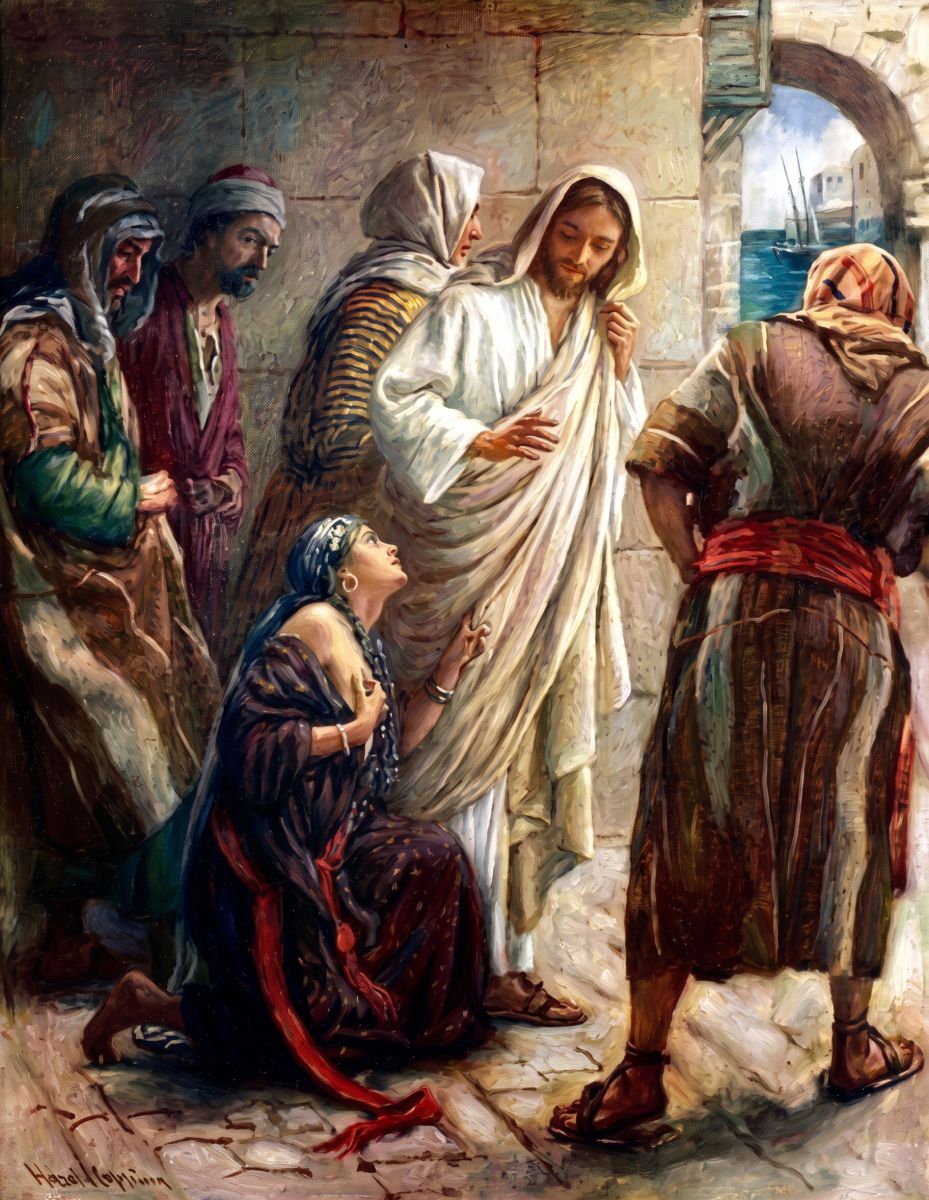
Our Gospel today illustrates this faith-filled hope in Jesus' encounter with the Canaanite woman whose daughter needs healing. The encounter, though short, is worth closer scrutiny. Firstly, at the time of Jesus (and to some extent today too), the prevailing society was male dominated and patriarchal. Women were generally not allowed to talk to a man who was not a family member or relative. Further, she was Canaanite (Gentile, a foreigner) trying to speak with a man who was not only a stranger but a Jew (their historical enemy). This was Gentile territory Jesus had entered, so it is unlikely that this woman would have seen any of Christ's miracles or healing except to hear of it second or third hand, yet she travelled from her village to seek the help of a Jew (who would regard her as unclean, not part of the covenant community).
Despite all these serious obstacles, she persists in trying to get Jesus' attention, screaming and shouting. Her love for her daughter is so great that she suffers ridicule and humiliation because she trusts that Jesus will heal her daughter. Jesus' first response is rude and abrupt, telling her his mission was to the lost sheep of Israel. The Jews often referred to the Gentiles as dogs, scavengers who ate whatever they found.
But she does not give up; she remains respectful, calling Jesus 'Lord' and 'Son of David', expressing her faith in Jesus' Messiahship (Son of David) and his power over demons ('Lord'). Her faith removed obstacles that may have deprived her of God's attention and her humble humour (even dogs get to eat the scraps that fall from the Master's table) causes Jesus to praise her: "O woman, great is your faith."
This lively and heart-warming encounter shows Jesus' warmth and humour towards women (the encounter with the woman at the well in John's Gospel is another). Her persistence in asking for Jesus to help despite all the obstacles of gender, race, culture, and the initial abrupt response is an example that teaches us never to give up in prayer, even when God seems silent at first.
An example of this is St. Monica's persistence in praying for her son, St. Augustine, to turn away from his rebellious and hedonistic lifestyle. She never gave up, praying for over 15 years for St. Augustine, and is an inspiring example of never giving up, even when things look hopeless. This mother's love eventually was rewarded when he was baptised in 387 CE. St. Monica was there. Because of her prayers, a man turned back to God to become a famous philosopher, theologian, writer, and a Doctor of the Church. God hears and will answer — just don't give up asking.